“She Had to Be the One”: The Scream Murder House at 11372 W. Whispering Cliffs Drive
September 26, 2026 · By Roy Condrey
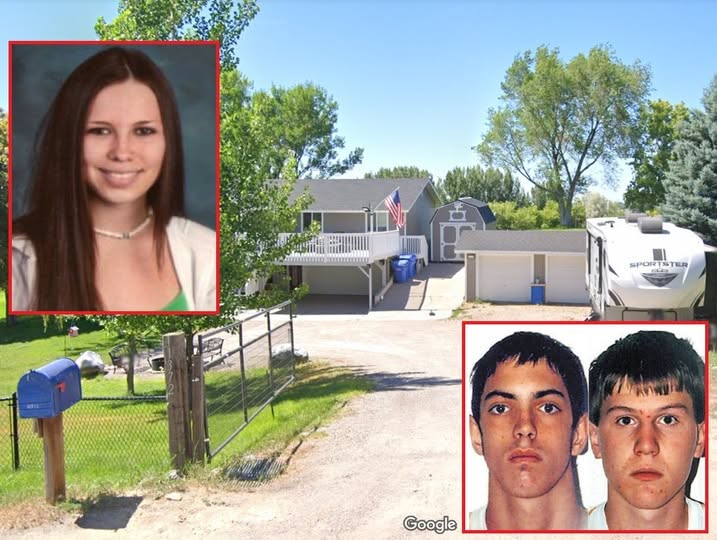
In 2006, Cassie Jo Stoddart was murdered while house-sitting at this Pocatello, Idaho, home. The killers recorded their plans, and the house later struggled to sell.
11372 W Whispering Cliffs Dr, Pocatello, ID 83202
There are houses people remember because of who lived there.
There are houses people remember because of how they look.
And then there are houses remembered for one night.
11372 W. Whispering Cliffs Drive in Pocatello, Idaho, is one of those houses.
On September 22, 2006, 16-year-old Cassie Jo Stoddart was house-sitting there for relatives.
By the end of the weekend, she would be dead.
What happened inside the home was disturbing enough. What investigators discovered afterward made the case almost impossible to comprehend.
Two of Cassie’s classmates had planned the killing in advance.
They recorded themselves talking about it.
They returned to the house wearing dark clothing and masks.
And before Cassie was killed, one of them said on camera:
“She had to be the one.”
Then came another line.
“She’s perfect.”
Nearly 20 years later, the case continues to receive national attention.
The house, meanwhile, is still there.
And that is where this story becomes more than a crime story.
It becomes a property-history story.
A Normal Friday Night
Cassie was staying at the Whispering Cliffs home while relatives Frank and Allison Contreras were away.
Her boyfriend, Matt Beckham, was with her that evening.
At some point, two classmates arrived: Brian Lee Draper and Torey Michael Adamcik.
Both were 16.
Nothing about the first part of the evening would have immediately suggested what was coming.
The teenagers spent time together and watched a movie.
Eventually, Draper and Adamcik said they were leaving.
But before they left, one of them made sure there was a way back inside.
According to court records, an entrance to the house was deliberately left unlocked.
The two boys walked out.
They did not simply go home.
The Plan Had Started Before That Night
One of the most troubling parts of the Cassie Jo Stoddart case is that investigators did not have to speculate much about what Draper and Adamcik had been thinking.
The boys had recorded themselves.
In the weeks leading up to Cassie’s death, they had discussed killing people and had acquired knives.
The night before the murder, they made another recording.
Cassie’s name came up.
Draper referred to her as their intended victim.
He also referenced the horror movie Scream.
That detail has been repeated so often over the years that it can sound like something added later by television producers or true-crime writers.
It wasn’t.
The reference appears in the actual court record.
That matters.
Because the connection to Scream was not something outsiders imposed on the story afterward.
It came from one of the people planning the crime.
They Came Back
After leaving the house, Draper and Adamcik went to their vehicle.
There, according to court records, they changed clothes and prepared to go back inside.
They had dark clothing.
They had masks.
They had knives.
And they had already made sure they could get back into the house.
At approximately 9:50 p.m., another recording was made.
Draper discussed the layout of the house and acknowledged that doors had been unlocked.
Then they returned.
Inside, the two hid in the lower portion of the residence.
At some point, the power went out.
Cassie and Matt became uneasy.
Neither wanted to go downstairs to investigate.
That detail, in retrospect, is chilling.
Someone was already in the house.
Matt Left
Later that night, Matt’s mother arrived to pick him up.
Cassie had the opportunity to leave.
She stayed.
She was house-sitting and apparently felt responsible for remaining at the property.
Matt left with his mother.
Cassie was now alone.
What followed happened inside the home at 11372 W. Whispering Cliffs Drive.
Cassie was attacked with knives.
The medical examiner later documented approximately 30 sharp-force injuries, with multiple wounds capable of causing death.
At least two different knives were involved.
Cassie died inside the house.
She was 16 years old.
Two Days Passed
The house remained quiet through Saturday.
Cassie’s relatives returned on Sunday, September 24.
They found her on the living-room floor.
A 911 call was made shortly before 2 p.m.
At first, investigators were dealing with the kind of question detectives face in any violent crime committed inside a residence:
Who had been there?
Who had access?
Who knew Cassie was alone?
The answer eventually led back to the two boys who had visited her Friday night.
Then investigators found something far more damaging than a witness statement.
They found the recordings.
The Camera Told the Story
Draper and Adamcik had documented parts of their planning before Cassie was killed.
They had also recorded themselves around the time of the crime.
The videos offered investigators something rare in a murder case: a window into the planning before the victim died.
One of the recordings included Draper speaking directly about Cassie.
He apologized to her family.
Then he said:
“She had to be the one.”
He described her as “perfect.”
The significance of those recordings was enormous.
This was not a case in which prosecutors had to build the entire argument for premeditation from circumstantial evidence.
The defendants had recorded discussions about killing.
They had discussed Cassie.
They had prepared weapons and clothing.
They had gained access to the house.
Then they returned.
The Trials
Both teenagers were prosecuted as adults.
In 2007, both were convicted of first-degree murder.
Draper was also convicted of conspiracy to commit first-degree murder and received a fixed-life sentence for murder.
Adamcik was convicted of first-degree murder and conspiracy to commit first-degree murder.
There is an important detail that is often missed when the case is summarized.
In 2011, the Idaho Supreme Court vacated Draper’s conspiracy conviction because of an error in the jury instructions.
His first-degree murder conviction remained intact.
So did his fixed-life sentence.
Adamcik’s murder and conspiracy convictions were upheld.
Both men remain incarcerated in Idaho.
Then There Was the House
Criminal cases eventually move into a different phase.
The crime scene tape comes down.
The investigators leave.
The courtroom proceedings begin.
But the house stays where it was.
That is what happened at 11372 W. Whispering Cliffs Drive.
For the family connected to the property, the crime created a problem that had nothing to do with the physical condition of the home.
They wanted to sell it.
Buyers knew what had happened there.
And according to the owners, that changed everything.
Years Without a Buyer
In 2014, the Idaho State Journal reported that the family had repeatedly tried to sell the property in the years after Cassie’s murder.
According to Frank Contreras, the home had been placed on the market year after year.
No offer came.
At one point, the family was reportedly willing to accept roughly the amount still owed on the mortgage just to move on.
The problem was not a bad roof.
It was not the foundation.
It was not a failed inspection.
It was the address.
The history of the house had become part of the value of the house.
Or, more accurately, part of what some buyers believed the house was worth.
That is the definition of a stigmatized property in its most practical form.
The House Eventually Sold
The property did eventually change hands.
It later returned to the market and, according to available property records, sold again in June 2020 for $240,000.
The house was built in 1979.
Current property sources describe it as a four-bedroom, three-bathroom single-family home with roughly 2,000 square feet of living space.
As of September 2026, the property is not currently listed for sale.
It appears to be a private residence.
To anyone passing it today, there may be nothing remarkable about it.
That is often the point.
A property does not look different because of something that happened there.
Would a Buyer in Idaho Have to Be Told?
This case raises an obvious question.
If you were buying this house today, would someone have to tell you what happened inside?
Not necessarily.
Idaho law addresses what it calls psychologically impacted real property.
That can include property associated with a homicide, suicide or felony when the event did not physically damage the home.
Generally, that type of history does not have to be volunteered to every prospective buyer.
Idaho law does provide a process for certain written inquiries from bona fide purchasers when the psychological history of the property matters to them.
But the larger point is simpler:
A buyer should not assume that a listing will automatically tell the complete story of an address.
That is true far beyond Idaho.
You Could Inspect This House and Still Never Know
A home inspector could spend hours inside this property.
They could inspect the electrical system.
They could test the plumbing.
They could examine the crawlspace, roof and HVAC equipment.
An appraiser could study comparable sales.
A title search could examine ownership.
None of those steps is designed to answer a very different question:
What happened here?
That is why property history matters.
A house can be structurally sound and still have a history that matters deeply to a buyer.
A person might decide that history makes no difference at all.
Someone else might walk away immediately.
Neither reaction is wrong.
What matters is knowing before you make the decision.
DiedInHouse has documented other properties where buyers reportedly learned disturbing information only after purchasing, including a Florida family that bought a home before discovering that three people had been killed inside.
That story can be read here:
39522 Greenbrier Street, Eustis, Florida: The Family Who Learned the History After Buying
More property-history cases are available through the DiedInHouse Property Insights archive.
The Case Returned to the Spotlight in 2026
The Cassie Jo Stoddart case never disappeared completely from public memory, but it received significant new attention in 2026.
ABC News Studios released the documentary series The Scream Murder: A True Teen Horror Story on Hulu.
The production revisited the crime, the recordings and the people involved.
Additional coverage followed later in 2026, including a multi-part video podcast featuring more material related to the case.
That renewed attention brought a new generation of viewers back to the story.
But much of the coverage naturally focused on Draper and Adamcik.
Far less attention has been paid to the house itself.
For DiedInHouse, that may be the most relevant part.
The building survived the crime.
The owners struggled to sell it.
The property eventually changed hands.
And today someone else lives there.
Twenty Years Later
Cassie Jo Stoddart was 16 years old when she walked into that house to spend a weekend helping relatives.
She had no reason to believe the address would become permanently linked to her name.
She could not have known that two classmates had already been talking about killing someone.
She could not have known that they had chosen her.
And when they left the house that Friday night, she could not have known they planned to come back.
Nearly two decades later, the court records remain.
The recordings remain.
The convictions remain.
And so does the house.
11372 W. Whispering Cliffs Drive, Pocatello, Idaho.
It sold.
People moved on.
Life continued.
But property history does not disappear simply because a listing closes.
Before You Buy, Learn the History of the Address
Buying a home is one of the largest financial decisions most people will ever make.
Most buyers would never skip an inspection.
Many would never skip an appraisal.
But very few buyers think to investigate the history of the address itself.
That history can include:
-
deaths associated with the property
-
violent crimes
-
fires
-
former residents and owners
-
drug-related activity
-
sex-offender information
-
other documented events or stigmas
No property-history service can guarantee that every event will be found. Records vary by jurisdiction, age, availability and reporting.
But the purpose is not to tell you whether you should buy a house.
It is to give you information before you decide.
Because there is a big difference between learning something before closing and hearing it from a neighbor after you move in.
Research an address at DiedInHouse.com.
An inspection tells you the condition of a house.
Its history may tell you something entirely different.
Frequently Asked Questions
Where did the Cassie Jo Stoddart murder happen?
Cassie Jo Stoddart was killed at 11372 W. Whispering Cliffs Drive in Pocatello, Idaho, while house-sitting for relatives.
When was Cassie Jo Stoddart killed?
She was killed during the night of September 22, 2006. Her body was discovered on September 24 when the homeowners returned.
Who killed Cassie Jo Stoddart?
Brian Lee Draper and Torey Michael Adamcik, both 16 at the time, were convicted of first-degree murder.
Was the crime really connected to Scream?
Yes. The connection is documented in the court record. Draper referenced Scream while discussing the planned killing before Cassie was murdered.
Are Brian Draper and Torey Adamcik still in prison?
Yes. Both remain incarcerated in Idaho.
What happened to the house afterward?
The owners later said they had considerable difficulty selling it because of its history. The property eventually changed hands and sold again in June 2020 for $240,000.
Is the Cassie Jo Stoddart house for sale now?
As of September 2026, the property does not appear to be actively listed for sale.
Does Idaho require a seller to disclose a murder in a house?
Not necessarily. Idaho law addresses homicide and similar events under its rules concerning psychologically impacted real property. Buyers who consider this type of history important should research the property independently and ask specific questions during the transaction.
Sources and Further Reading
Idaho Supreme Court — State v. Draper
https://law.justia.com/cases/idaho/supreme-court-criminal/2011/34667.html
Idaho Supreme Court — State v. Adamcik
https://law.justia.com/cases/idaho/supreme-court-criminal/2012/34639.html
Idaho Department of Correction — Brian Draper
https://www.idoc.idaho.gov/content/prisons/resident-client-search/details/85763
Idaho Department of Correction — Torey Adamcik
https://www.idoc.idaho.gov/content/prisons/resident-client-search/details/86328
Idaho Code — Psychologically Impacted Real Property
https://law.justia.com/codes/idaho/title-55/chapter-28/
DiedInHouse Property Insights
https://diedinhouse.com/property-insights
You May Also Like

Idaho Death Disclosure Law: Murder, Suicide, Stigmatized Property & What Buyers Should Know
September 26, 2026 · By Roy Condrey
Does Idaho require sellers to disclose a death, murder, suicide or stigmatized property? Learn what Idaho law says about psychologically impacted homes and what buyers should know before purchasing.
The Home Was in Foreclosure. Then Two People Were Found Dead Inside.
September 25, 2026 · By Roy Condrey
The history of 6524 Fairfax Dr, Harrisburg, PA: foreclosure proceedings, the 2025 death of Gary Gibson, Alysse Saucedo, and three separate fire sources found inside the home.
45 Toll Gate Road, Glastonbury: Home Where Retired Detective Was Found Dead Returns to Market After Renovation
September 22, 2026 · By Roy Condrey
Explore the history of 45 Toll Gate Road in Glastonbury, CT, where retired detective Mary Notarangelo was found dead before the home was renovated and relisted.
25 Malta St., Boston: $1.15 Million Home Was Pulled From the Market the Day of a Homicide
September 21, 2026 · By Roy Condrey
25 Malta St. in Boston was listed for $1.15 million when 18-year-old Yoseliani Ann Marte Ocasio was fatally shot inside. The listing was removed the same day.
They Bought the ‘American Horror Story’ House for $3.2 Million. They Say No One Warned Them About the Fans
September 02, 2026 · DiedinHouse.com
A couple paid $3.2 million for the American Horror Story “Murder House” at 1120 Westchester Place. They knew it had appeared on TV, but say they weren't warned about the fans, trespassing and privacy problems that came with it.
Research a House Before You Buy: Know Its History Before Spending Hundreds
August 16, 2026 · DiedinHouse.com
Research a house’s history before you buy. Learn why checking for deaths, crimes and other past events before paying for an inspection and appraisal could save you time, money and unwanted surprises.
13 Things Your House Might Be Hiding: How to Uncover Its History This Halloween
August 13, 2026 · DiedinHouse.com
You know what your house looks like today. But do you know what happened there 10, 50, or even 100 years ago? Discover how to uncover your home's hidden history.
He Bought a Home. Then He Learned Someone Was Killed on His Front Porch.
July 28, 2026 · DiedinHouse.com
A Columbus homeowner says he was never told about a fatal stabbing that occurred at his home years before he bought it.
.jpg)
JonBenét Ramsey Murder House Address Changed to 749 15th Street, Boulder, CO 80302, But History Remains
June 26, 2026 · DiedinHouse.com
Explore the history of JonBenét Ramsey's Boulder murder house, why its address changed from 755 to 749 15th Street, Boulder, CO 80302, and the investigation's latest updates.

Some of America’s most infamous murder houses no longer exist under the addresses the public remembers.
June 26, 2026 · DiedinHouse.com
Some of America’s most infamous murder houses no longer exist under the addresses the public remembers. From the Sharon Tate murder house to the Amityville Horror house and John Wayne Gacy’s former property, this article explores why notorious homes are demolished, rebuilt, renumbered, or quietly distanced from their pasts—and why house history matters before buying.

Sharon Tate House: The History of 10050 Cielo Drive Beverly Hills, CA 90210 (Now 10066 Cielo Drive Beverly Hills, CA 90210) and the Manson Family Murders
June 21, 2026 · DiedinHouse.com
Explore the history of Sharon Tate’s house at 10050 Cielo Drive Beverly Hills, CA 90210, site of the Manson murders, ownership changes, demolition and legacy.

Houses for Sale Near Me? Here's What Smart Homebuyers Research Before Making an Offer
June 19, 2026 · DiedinHouse.com
Research property history, crime data, previous owners, deaths, permits and hidden risks before buying a house or investment property. Before you buy, learn how to research a property's history, ownership records, crime data, neighborhood trends, and hidden risks that may not appear in a real estate listing.

Lizzie Borden House: The Complete House History of 230 Second Street, Fall River, Massachusetts 02721
June 19, 2026 · DiedinHouse.com
Lizzie Borden House: History of 230 Second Street, Fall River, Massachusetts 02721. Explore the history of the Lizzie Borden House at 230 Second Street in Fall River, MA, including murders, owners, legends and laws.
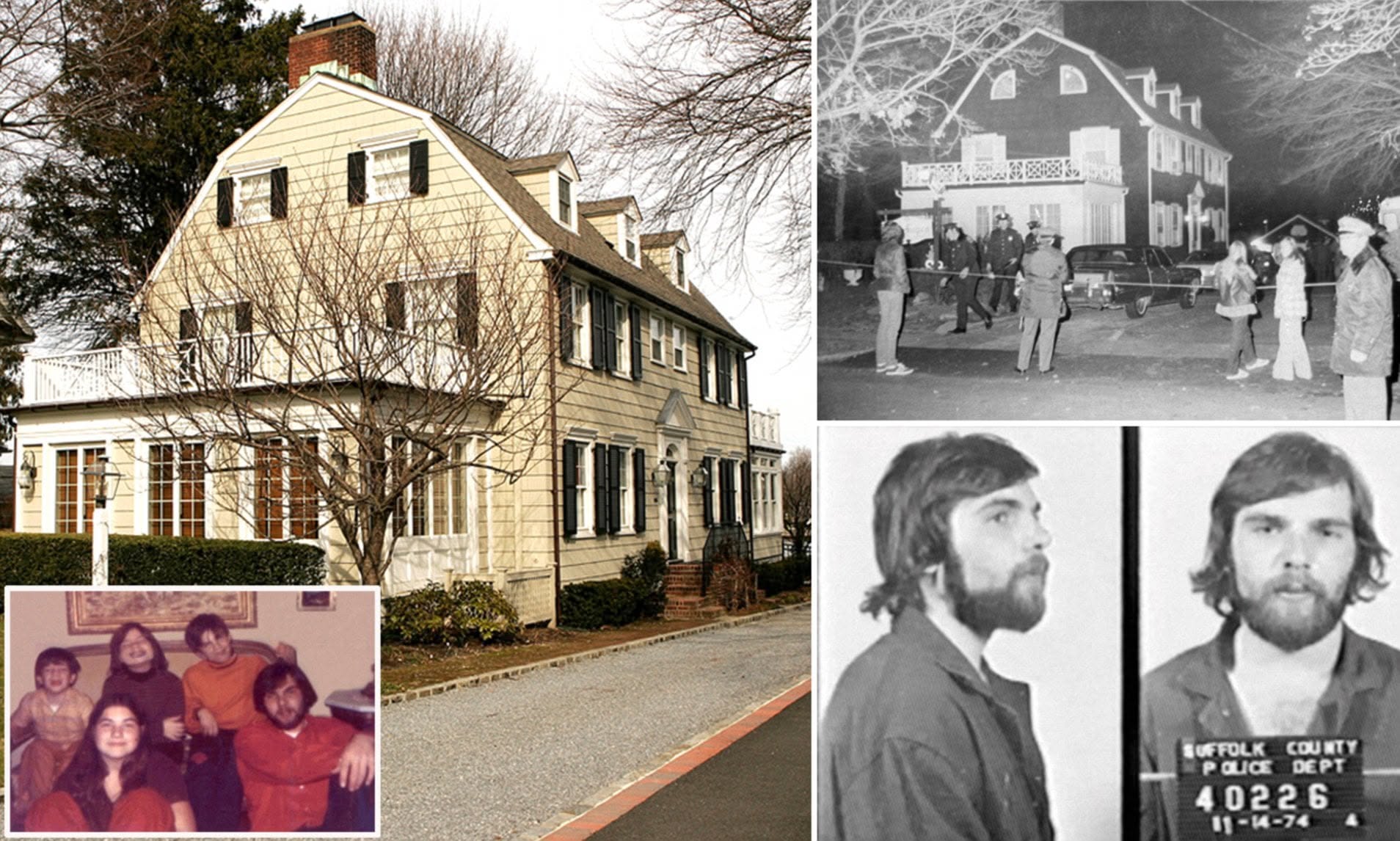
The House That Wouldn’t Be Forgotten: The Complete Story of 108 Ocean Avenue, Amityville, New York, Formally 112 Ocean Avenue, Amityville, New York 11701
June 14, 2026 · DiedinHouse.com
108 Ocean Avenue, formerly 112 Ocean Avenue, Amityville, New York 11701, became infamous after the 1974 murders of six members of the DeFeo family. The Amityville, New York home later inspired The Amityville Horror, becoming one of America's most famous stigmatized properties.

Appraisals Tell You the Value. Inspections Tell You What’s Wrong. But Neither Tells You the House’s Story.
May 21, 2026 · DiedinHouse.com
Home appraisals and inspections are essential parts of buying a house, but they do not reveal everything a buyer may want to know. This article explains why a property history search adds an important third layer of due diligence by helping buyers uncover publicly available information about murders, suicides, violent crime, drug activity, fires, and other stigmatizing events connected to an address.