Netflix released Monster: The Lizzie Borden Story on September 17, 2026
September 17, 2026 · DiedinHouse.com
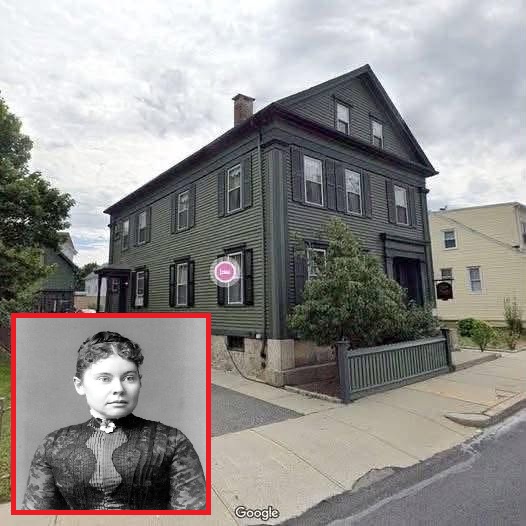
Netflix’s Monster: The Lizzie Borden Story is bringing new attention to the real Fall River house where Andrew and Abby Borden were killed in 1892. More than 130 years later, 230 Second Street is still standing and open to visitors.
230 Second St., Fall River, MA 02721
Netflix released Monster: The Lizzie Borden Story on September 17, 2026, bringing one of America’s most famous unsolved murder cases back into the spotlight. The new season of Ryan Murphy and Ian Brennan’s Monster anthology revisits the events surrounding Lizzie Borden and the deaths of her father and stepmother in Fall River, Massachusetts. Netflix has also published a new feature examining the true story behind the series, giving viewers a fresh reason to look into what really happened in 1892. Read Netflix Tudum’s look at the true story behind Monster: The Lizzie Borden Story.
One part of that story is especially interesting from a house-history standpoint: the real home where Andrew and Abby Borden were killed is still standing. The property is located at 230 Second St., Fall River, MA 02721, although in 1892 it was known as 92 Second Street. Andrew Borden purchased the house in 1872 and remodeled what had been a two-family dwelling into a home for his family. The official Lizzie Borden House history describes it as a practical choice because it was close to Andrew’s business interests in downtown Fall River. Read the official history of the Lizzie Borden House.
On the morning of August 4, 1892, Andrew Borden and his second wife, Abby, were killed inside the home. Abby was found upstairs in a guest bedroom, while Andrew was discovered downstairs on the sitting-room sofa. The killings occurred in broad daylight on what was then a busy street, yet no one outside the home reported seeing the person responsible enter or leave. The Smithsonian has written extensively about the case and the circumstances that made it one of the most enduring crime stories of the late 19th century. Read the Smithsonian’s detailed history of the Lizzie Borden case.
Lizzie Borden quickly became the focus of the investigation and was arrested on August 11, 1892. She was eventually tried for the murders in New Bedford, Massachusetts, in June 1893. The prosecution relied heavily on circumstantial evidence, and several pieces of evidence it hoped to present were excluded. After about 90 minutes of deliberation, the jury found Lizzie Borden not guilty. No one else was ever convicted in the deaths of Andrew and Abby Borden, and the murders remain unresolved. HISTORY recently updated its account of Lizzie Borden’s acquittal and the trial.
That legal history matters now because the Netflix series is a dramatized interpretation of the case, not a final answer to what happened inside the house. The historical record confirms that Lizzie was accused, charged, tried and acquitted. The question of who actually killed Andrew and Abby Borden has never been conclusively answered.
What makes the property especially unusual is what happened to the house after the case faded from the headlines. The building did not disappear, and it was not torn down or quietly absorbed back into ordinary residential use. Instead, the history became part of the property’s identity. Today, the house operates as the Lizzie Borden House, an inn and museum where visitors can take historical tours and even spend the night. The rooms connected to the Borden family and the events of August 4, 1892, remain central to the experience. Visit the official Lizzie Borden House website.
The property has also continued to attract attention in the real-estate world. When it was offered for sale in 2021, Realtor.com emphasized that this was not simply a house once owned by the Borden family. It was the actual residence where Andrew and Abby were killed. The property was listed for $2 million, and its history was clearly part of what made the sale nationally newsworthy. Read Realtor.com’s coverage of the Lizzie Borden House being listed for sale.
Smithsonian also covered the property after it changed ownership, examining how the house’s new operators would handle the tension between historical accuracy, tourism and the darker aspects of the Borden story. Read Smithsonian’s feature on the Borden house under new ownership.
The reason this property remains so interesting is that it demonstrates the difference between a house’s physical condition and its history. A home inspection can tell a buyer about the roof, foundation, plumbing, electrical system and other physical components. An appraisal can help estimate what a house is worth. Property records can show ownership, assessed values and previous sales. None of those things, by themselves, explain why people are still traveling to Fall River more than 130 years later to see 230 Second Street.
That requires researching the address.
The Lizzie Borden House is an extreme example because its history is internationally famous. Most properties with unusual histories are not. A death may have occurred years earlier under a previous owner. A serious crime may have taken place at the address. There may have been a fire, an unusual incident, a notorious former resident or some other event that never appears during a typical walkthrough of the house.
That is where house-history research becomes especially important. Realtor.com has written about ways buyers can investigate whether someone died in a house before purchasing it, including public records, newspaper archives, neighbors and specialized services. The publication specifically identifies DiedInHouse.com as one resource buyers can use to research deaths and other potentially stigmatizing events associated with a property. Read Realtor.com’s guide to finding out whether someone died in a house before you buy.
DiedInHouse.com was created to help fill that gap between what a buyer can see during an inspection and what may have happened at an address before they arrived. The service has also received national media attention over the years for helping buyers research deaths and other property-history information that might otherwise be difficult to uncover.
Forbes previously profiled DiedInHouse.com and the problem the service was designed to address: buyers can usually find plenty of information about a property’s physical features and market value, but determining whether someone died there can require a completely different kind of research. Read Forbes’ coverage of DiedInHouse.com.
The Borden property shows why that history can matter, but it also shows that a stigma does not mean the same thing to everyone. Some people would never consider living in a house where a notorious death occurred. Others may be fascinated by that history. At 230 Second Street, the property’s past eventually became part of its commercial identity, drawing visitors who specifically want to experience the house because of what happened there.
That is an important point for homebuyers. The purpose of researching a property’s history is not to tell someone whether they should or should not buy it. It is to give them more information before they make that decision.
Most people will never encounter a home as famous as the Lizzie Borden House. But every property has a past, and some of that past may not be obvious from listing photos, public sales data or an inspection report. Ownership changes. Interiors are renovated. Decades pass. The events connected to an address do not necessarily disappear with them.
With Netflix now bringing the Lizzie Borden story back to millions of viewers, attention will once again focus on the question people have debated since 1892: who killed Andrew and Abby Borden? Netflix’s own Tudum coverage revisits the real history behind the new season while making clear that the series is a dramatization of a case that remains unresolved. Read Netflix’s current true-story feature here.
What is not a mystery is the address.
230 Second St., Fall River, MA 02721.
The house is still there. People can tour it. People can sleep there. And more than 130 years after two people died inside, its history remains one of the defining features of the property.
That may be one of the clearest examples of why a house can be more than bedrooms, bathrooms, square footage and an asking price.
Before spending hundreds or thousands of dollars on inspections and appraisals, it can be worth researching the property’s history first.
House History First. Then Inspection. Then Appraisal.
Research a property at DiedInHouse.com.
Because every home has a story.
You May Also Like
Serial Killer Houses: 17 Infamous Addresses and What Happened to Them
August 29, 2026 · DiedinHouse.com
Explore 17 infamous serial killer houses and addresses linked to Jeffrey Dahmer, John Wayne Gacy, Ted Bundy, BTK, Dorothea Puente and others, and discover which properties still stand today.
The Most Haunted House in Every State: 50 Famous Places and the Stories Behind Them
August 22, 2026 · DiedinHouse.com
Discover the most famous haunted house in every state, including real addresses, documented history, ghost stories and what homebuyers should know before buying.
13 Things Your House Might Be Hiding: How to Uncover Its History This Halloween
August 13, 2026 · DiedinHouse.com
You know what your house looks like today. But do you know what happened there 10, 50, or even 100 years ago? Discover how to uncover your home's hidden history.

Real Haunted Murder Houses You Can Visit This Halloween
July 06, 2026 · DiedinHouse.com
Discover real murder houses that open for Halloween ghost tours, overnight stays, and paranormal investigations, including the Lizzie Borden and Villisca Axe Murder houses.

The LaLaurie Mansion: The True Story Behind America’s Most Infamous Haunted House - 1140 Royal Street, New Orleans, Louisiana 70116
July 05, 2026 · DiedinHouse.com
Explore the true history of the LaLaurie Mansion at 1140 Royal Street, New Orleans, including ownership, architecture, crimes, legends, and law.

Some of America’s most infamous murder houses no longer exist under the addresses the public remembers.
June 26, 2026 · DiedinHouse.com
Some of America’s most infamous murder houses no longer exist under the addresses the public remembers. From the Sharon Tate murder house to the Amityville Horror house and John Wayne Gacy’s former property, this article explores why notorious homes are demolished, rebuilt, renumbered, or quietly distanced from their pasts—and why house history matters before buying.

Winchester Mystery House: The Complete History of 525 S Winchester Blvd, San Jose, California 95128
June 16, 2026 · DiedinHouse.com
Explore the complete history of 525 S Winchester Blvd, San Jose, CA 95128 home of the Winchester Mystery House, legends, ownership, deaths, and lore.

The Untold Story of Biltmore Estate: The Families, Farms, Cemeteries, and Secrets Behind America's Largest Home
June 15, 2026 · DiedinHouse.com
Before Biltmore Estate rose over Asheville, hundreds of families lived on the land. Discover the hidden history of 1 Lodge Street, NC

Would You Stay in a Hotel Room Where Someone Died?
June 04, 2026 · DiedinHouse.com
Most travelers spend hours comparing hotel prices, reading reviews, and checking amenities before booking a stay. But there’s one question almost nobody asks:

The Most Famous Murder Houses in America, And What Happened to Their Property Values
May 24, 2026 · DiedinHouse.com
Some homes are remembered for their architecture. Others for their celebrity owners. And then there are the houses America can’t forget because of what happened inside them.