Who Lived in My House Before Me? How to Find Previous Residents
July 25, 2026 · DiedinHouse.com
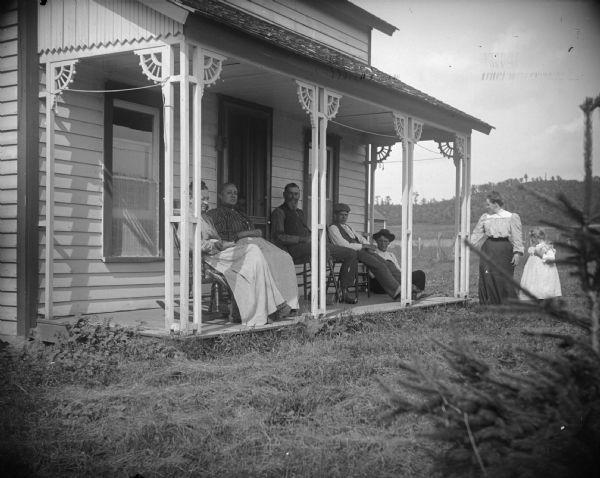
Your house had a life before you moved in. Here's how to find the people who once called your address home—and what their names can reveal about your property's history.
You know who lives in your house now.
But who slept in your bedroom 20, 50 or even 100 years ago?
Who cooked in the kitchen? Who raised their children there? Who planted the old tree in the backyard? Who built the addition? Who was the last person to walk out the front door before another family moved in?
For many houses, you can actually find out.
Property records, old city directories, census records, deeds, newspapers, obituaries and historical archives can help reconstruct a surprisingly detailed list of the people who once called your address home.
And finding their names is often only the beginning.
Because once you know who lived there, you can start discovering what happened while they were there.
Previous Owners and Previous Residents Are Not the Same Thing
This is the most important thing to understand before you begin.
The person who owned your house didn't necessarily live there.
Consider a rental house owned by the same landlord for 30 years. The ownership records may show one name while a dozen different families actually occupied the property.
The opposite can happen too.
Someone may inherit a house but never move into it. An investor might purchase and renovate a property without occupying it. A company or trust may appear as the legal owner.
So if your question is:
“Who owned my house before me?”
Start with deeds and property records.
If your question is:
“Who actually lived in my house before me?”
You need to go further.
DiedInHouse has a separate guide explaining how to find previous owners of a house.
For this investigation, we're looking for the people who actually called the address home.
1. Start With What You Already Know
Write down the complete current address:
House number
Street name
City
State
ZIP code
County
Then determine approximately when the house was built.
Knowing the age of the house gives you a starting point. A home built in 1995 requires a very different search from one built in 1895.
If you don't know the age, start with your county assessor or property appraiser and look for the “year built” in the property record.
You can also use our guide, [How Old Is My House? Find Out When Your House Was Built], to verify the construction date using property records, permits, deeds and historical maps.
Now you're ready to start working backward.
2. Find the Previous Owners
Even though owners and residents aren't always the same, ownership history provides names you can investigate.
Start with your county assessor, recorder, register of deeds or equivalent local office.
Look for:
-
Current owner
-
Previous owner
-
Sale dates
-
Recorded deeds
-
Transfer documents
-
Parcel number
-
Property description
Follow the deeds backward to establish the property's chain of title.
If John and Mary Smith sold the house to the people who sold it to you, John and Mary become your first leads.
But don't assume they lived there.
Now you need to verify occupancy.
3. Search Old City Directories
For older American homes, city directories can be one of the most useful resources available.
Think of them as an early combination of a phone book, people-search service and local business directory.
The Library of Congress describes city directories as important sources for researching urban residents. Depending on the directory, entries can include a person's address, occupation, employer and spouse.
Even better for house-history research, some directories can be searched by address rather than just by name.
The Library of Congress maintains a collection covering more than 1,200 cities, towns and counties, primarily between 1861 and 1960.
Search the Library of Congress U.S. City Directories collection.
Suppose your house is at 123 Main Street.
A directory might show:
1925 — Robert Miller, carpenter
1927 — Robert Miller, carpenter
1929 — Robert Miller, carpenter
1931 — James Wilson, salesman
Now you know approximately when one household left and another arrived.
Do that year after year and you can begin constructing a resident timeline.
4. Look for Reverse or “Criss-Cross” Directories
These are especially useful because they turn the usual search process around.
Instead of searching:
Person → Address
you can search:
Address → Person.
The Library of Congress maintains a collection of criss-cross directories covering periods from 1930 through 2005. These directories are organized by street and house number and can identify people associated with a particular address.
Explore the Library of Congress Reverse Telephone Directory collection.
For this particular question—“Who lived in my house before me?”—that can be an exceptionally useful resource.
5. Search Historical Census Records
If your house is old enough, federal census records can open another window into its past.
The National Archives maintains federal population census records from 1790 through 1950. Because census schedules remain confidential for 72 years, 1950 is currently the newest census available to the public.
Depending on the census year, records can reveal much more than a name.
You may find:
-
Household members
-
Ages
-
Birthplaces
-
Marital status
-
Occupations
-
Immigration information
-
Whether the home was owned or rented
-
Property values or rent
-
Street address
Explore historical census records through the National Archives.
For many censuses beginning in 1850, individual household members were recorded by name.
That means you may not simply discover that “William Johnson” lived in your house.
You could discover his wife, children, mother-in-law and other people sharing the home.
Suddenly the property isn't just an old building.
You can see the household that occupied it.
6. Build a Resident Timeline
Don't collect random names.
Create a timeline.
For example:
1926–1938 — William and Anna Johnson family
1939–1947 — Robert and Helen Davis family
1948–1963 — George and Margaret Wilson family
1964–1972 — Unknown/rental period
1973–1991 — Thomas Miller
1992–2005 — Susan and Richard Parker
Record where every name came from.
Deed.
City directory.
Census.
Newspaper.
Obituary.
Property record.
The goal isn't merely to collect names. It's to establish which people can actually be connected to the address and during what period.
That distinction becomes important when you start researching their lives.
7. Search Historical Newspapers
This is where the investigation can become fascinating.
Once you identify a previous resident, search the person's name together with the address.
Try:
“William Johnson” + “123 Main Street”
Then search the address itself:
“123 Main Street”
Try abbreviations:
“123 Main St.”
Search the street name and city.
Search former residents' names individually.
Historical newspapers may reveal ordinary moments:
Birth announcements.
Weddings.
Graduations.
Business advertisements.
Military service.
Community events.
Homes listed for sale.
Visitors from out of town.
And sometimes they reveal much more significant events:
Fires.
Accidents.
Crimes.
Court cases.
Deaths.
Major renovations.
The name of a previous resident can unlock stories that an address-only search never finds.
This is why identifying former occupants is such a powerful part of house-history research.
8. Search Obituaries
Obituaries can be surprisingly useful for confirming whether someone lived at an address.
An obituary may identify where a person lived, relatives, occupation, community involvement and other biographical information.
It can also connect generations.
Suppose a city directory tells you that Arthur Williams lived in your house in 1940.
An obituary identifies his wife and children.
Those names lead to another newspaper article.
That article mentions the family residence.
Now multiple independent sources point to the same household.
This is how a house history gradually comes together.
One record leads to another.
9. Check Voter, Genealogy and Historical Records
Depending on the location and time period, other sources may help establish residency.
These can include:
-
Voter registration records where publicly available
-
Genealogy databases
-
Marriage records
-
Birth records
-
Death records
-
Military records
-
Probate files
-
School records
-
Church records
-
Local histories
-
Historical society collections
Availability varies enormously by jurisdiction and period.
Don't expect every house to have the same paper trail.
A well-documented city house built in 1900 may be relatively easy to research.
A rural property that once used a route number instead of today's street address may be much harder.
10. Ask Your Neighbors
Sometimes the fastest historical database is the person who's lived across the street for 50 years.
Longtime neighbors may remember:
Who lived there.
Whether they had children.
When they moved.
Whether the house was rented.
When an addition was built.
What the property looked like before remodeling.
And sometimes they'll remember something you'd never think to search for.
Treat neighborhood memories as leads rather than proof.
People misremember dates, names and details.
If a neighbor tells you something interesting, try to verify it through newspapers, public records or other reliable sources.
But don't overlook them.
A single name can break open an investigation.
11. Check Your Local Library or Historical Society
Some of the best information about your house may not be online.
Local libraries and historical societies can hold:
-
City directories
-
Old telephone books
-
Historic photographs
-
Neighborhood histories
-
Newspaper archives
-
Property files
-
Maps
-
Family collections
-
Oral histories
-
Architectural surveys
If you have an older house, tell the librarian or archivist you're researching the history of a specific address.
They may know exactly where to look.
What If Your Address Changed?
This is one of the biggest traps in house-history research.
You search your current address back to 1900 and find nothing.
That doesn't necessarily mean nobody lived there.
The address itself may not have existed.
Street names change.
House numbers change.
Cities renumber entire streets.
Rural routes become named roads.
Municipalities annex neighborhoods.
A house can physically remain in the same location while its mailing address changes around it.
Compare old maps, deeds and directories.
Use the parcel or legal property description when possible.
If you discover an older version of the address, repeat your searches using it.
You may suddenly uncover decades of missing history.
What If Your House Was a Rental?
This is where resident research becomes particularly important.
Imagine a house built in 1920.
County records show only eight owners over the next century.
It sounds simple.
But perhaps three of those owners used it as a rental property.
The actual number of households that lived there could be dozens.
That's why ownership history alone cannot completely answer “Who lived in my house before me?”
Look for directories, census records, reverse directories and other records that identify occupants rather than just title holders.
What Can You Learn Once You Find Previous Residents?
This is where the question changes.
You started with:
Who lived here?
Now you can ask:
What happened while they lived here?
Perhaps the original owner built the house and raised a family there for 40 years.
Maybe a previous resident ran a small business from the property.
Someone notable may have lived there before becoming famous.
The house could have appeared in an old newspaper.
A longtime resident may have passed away there.
There may have been a fire, crime, accident or other documented event connected to the property.
Or you may discover something completely ordinary but personally fascinating—a century ago, another family was eating dinner in the same room where your family eats today.
Not every house has an infamous past.
But almost every older house has a human one.
Search the People, Not Just the Property
This is one of the most useful lessons in property-history research.
If you only search an address, you may miss much of its history.
Older newspaper articles weren't written for modern search engines. A report might identify “the home of Charles Thompson” without printing the complete street address.
An obituary might mention the town but not the house number.
A court record might identify the person rather than the property.
That's why previous residents matter.
The research sequence becomes:
Address → Owner → Resident → Name → Newspaper → Event → Address.
Sometimes a person's name leads you back to a part of the property's history you never would have found by searching the address alone.
Previous Residents Can Reveal a House's Hidden History
DiedInHouse already recommends combining public records, archives and community sources when researching a property's history.
Our beginner's guide to researching the history of a house explains how deeds, permits, newspapers, maps and other records fit together.
There's also a reason previous residents deserve their own investigation.
Property records tell you about real estate.
People tell you the story.
Once you've identified the people connected to the property, you can begin looking for events associated with them and the address.
That's where a list of names can become an actual house history.
Buying a House? Ask Who Lived There Before You
This isn't only something to do after you've owned a house for 20 years.
It can be useful before buying one.
For years, buyers have relied on two important steps in the real estate process:
A home inspection evaluates the property's physical condition.
An appraisal helps determine its value.
Both are important.
But neither is designed to reconstruct generations of previous residents or provide a complete history of what happened at an address.
House-history research answers a different set of questions.
Who lived here?
What happened here?
Is there anything about the property's past I would want to know before making it my home?
Before spending hundreds of dollars on an inspection and appraisal, consider researching the house history early in the process.
It doesn't replace either one.
It adds another layer of information.
House History First → Inspection → Appraisal → Better-Informed Decisions.
A Faster Way to Start Researching Previous Residents
You can do all of this manually.
And for people who enjoy historical research, it can be incredibly rewarding.
But records are scattered.
One county may have excellent online property records while another requires an in-person search. Historical directories may exist only on microfilm. Newspapers may sit behind archive subscriptions. Older records may never have been digitized.
DiedInHouse can provide another starting point.
A DiedInHouse Premium report uses multiple data sources to identify names associated with an address. Those people may have owned or lived at the property, so the results should be treated as research leads rather than proof that every person actually occupied the house.
From there, you can investigate the names using deeds, directories, census records, newspapers and other historical sources.
Search an address at DiedInHouse.com
Because sometimes finding one name is all it takes to uncover an entire chapter of a house's past.
Frequently Asked Questions
How can I find out who lived in my house before me?
Start with previous owners, then search city directories, reverse directories, historical census records, newspapers, obituaries and local archives. For older homes, combining several sources usually produces a more reliable resident timeline than relying on a single database.
Can I find previous residents by address?
Sometimes. Reverse or criss-cross directories are particularly useful because they organize information by street and house number. Historical city directories may also contain address-based listings.
Are previous owners the same as previous residents?
Not necessarily. A landlord or investor can own a house without living there, while multiple tenants may occupy the property during a single owner's tenure.
Can census records tell me who lived in my house?
They can help. Public federal census records currently extend through 1950. Depending on the census year, records may include household members, ages, occupations, birthplaces, street addresses and whether the home was owned or rented.
How far back can I find previous residents?
That depends on the age and location of the property and which records survive. City directories, deeds, census records, newspapers and local archives can sometimes trace occupants back well into the 1800s.
How do I find previous renters?
Renters usually won't appear in the chain of title because they didn't own the property. City directories, reverse directories, census records, newspapers and other address-based historical records can be more useful for identifying tenants.
What should I do after finding a previous resident's name?
Search the person's full name along with the address, street, city and approximate years of residence. Check newspapers, obituaries, genealogy sources and public records. Verify interesting discoveries through reliable sources before treating them as fact.
Every House Has Had People Before You
Unless you moved into a newly built home, somebody else probably knew your house before you did.
They opened the same front door.
They looked through the same windows.
They heard the same rain on the roof.
Years later, most of their names may have disappeared from the house completely.
But they haven't necessarily disappeared from the historical record.
Find the names.
Build the timeline.
Then see where the story takes you.
Because learning who lived in your house before you may answer a question you didn't know to ask:
What happened here before I arrived?
You May Also Like
The House Looked Perfect. Its Past Wasn't in the Listing: What Buyers Can Miss About a Home's History
September 01, 2026 · DiedinHouse.com
Every house has a past. Learn how to uncover hidden property history, previous residents, deaths, fires, news stories and other events connected to an address.

How to Find Previous Owners of a House (Complete Guide)
March 30, 2026 · DiedinHouse.com
Learn how to find previous owners of a house using public records, deeds, and property databases, and discover the fastest way to trace ownership history.
Steps to Research the History of a House (Beginner Guide)
December 23, 2025 · DiedinHouse.com
Learn how to research house history, including past owners, deaths, renovations, and property records using public and historical sources.