How to Find Old Photos of Your House
July 18, 2026 · DiedinHouse.com
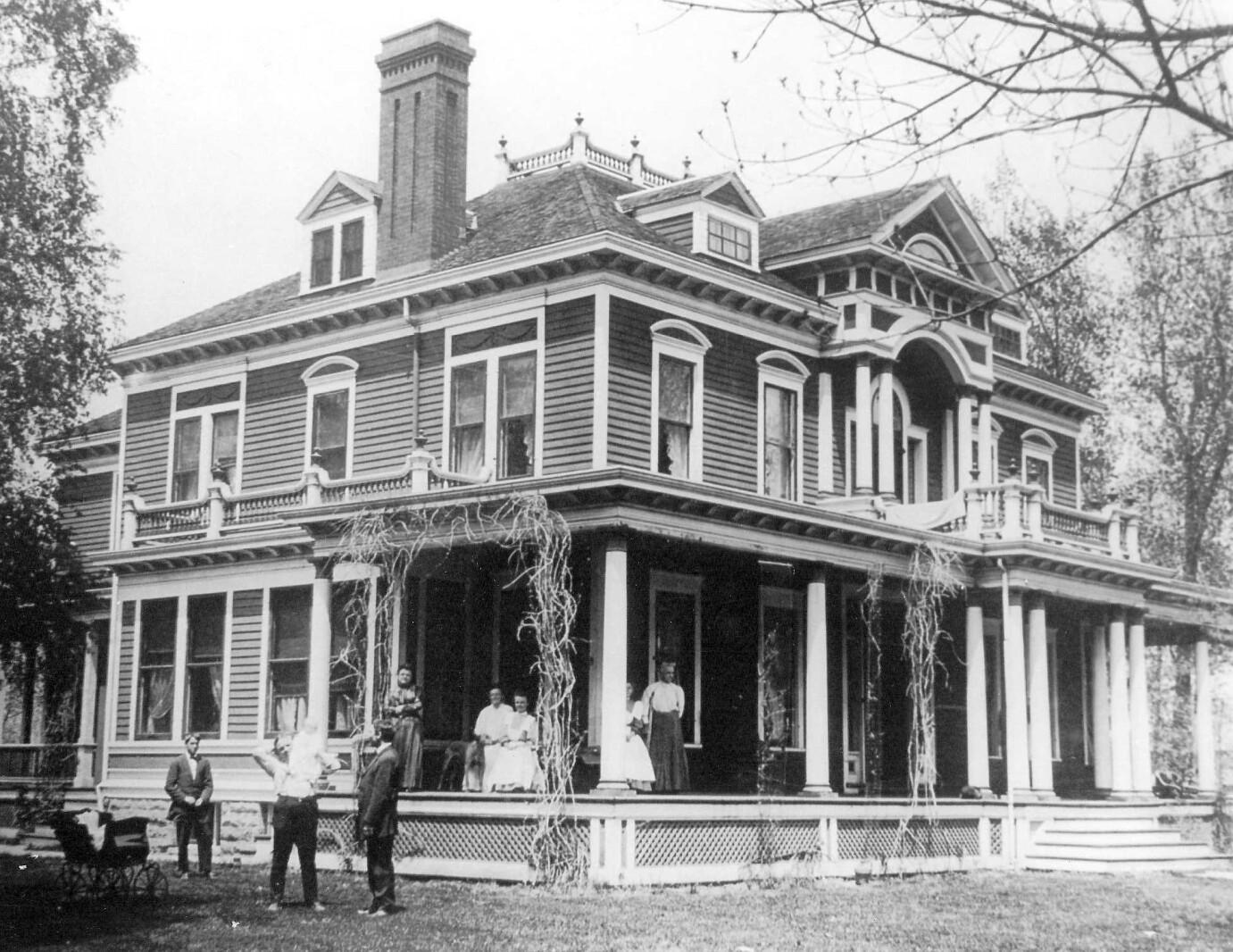
Your house may have been photographed decades before you lived there. Here's where to look, what to search for and how to find pictures hiding in archives you may never have considered.
Have you ever wondered what your house looked like 20, 50 or even 100 years ago?
Maybe the porch was different.
The trees weren't there.
The neighboring houses hadn't been built.
The road wasn't paved.
Or perhaps an entirely different house once stood on the property.
For many homeowners, old photographs of their house actually exist. The difficult part is finding them.
They may be sitting in a library archive, an old newspaper, a county file, a historical society's collection or a box of photographs belonging to someone who lived in the house generations ago.
And there's an important trick to finding them:
Don't search only for your house.
Sometimes the photograph you're looking for wasn't taken of your house at all.
Your home may simply be sitting in the background.
Start With Your Exact Address
Begin with the obvious.
Search your complete address in quotation marks:
“123 Main Street”
Then try variations:
“123 Main St.”
“123 Main”
“123 Main Street” + your city
Try Google Images as well as the regular search results.
Then add words such as:
old
historic
house
home
property
photograph
photo
archive
real estate
If your home was ever advertised for sale or rent, you may find photographs from an older listing.
But don't stop if an exact-address search produces nothing.
For an older house, that is often just the beginning.
Find Out Whether Your Address Changed
Before spending hours searching, determine whether your house always had its current address.
This matters more than many homeowners realize.
The Library of Congress warns house-history researchers that house numbers, street names, town names and even jurisdictional boundaries can change over time.
Your house might have been:
123 Main Street today
but
57 Main Street in 1940.
Or Main Street may once have been called something completely different.
An old photograph could be correctly cataloged under an address that no longer exists.
Check:
-
Old deeds
-
City directories
-
Historical maps
-
Property records
-
Newspaper archives
-
Local histories
Once you discover an earlier address or street name, search again.
That one detail can unlock decades of missing records.
Search Your Local Library
Your public library may be one of the best places to find an old photograph of your house.
Look for a local-history or special-collections department.
Libraries may have:
-
Historical photographs
-
Neighborhood collections
-
Old newspapers
-
City directories
-
Postcards
-
Maps
-
Real estate advertisements
-
Architectural surveys
-
Family collections
-
Local-history books
Search the library's digital collection first.
If you don't find anything, contact the local-history librarian.
Give them your address, approximate year built, neighborhood and any previous owners you've identified.
Not everything has been digitized.
A photograph that doesn't appear in an online search may still be sitting in a physical collection.
The Library of Congress notes that local institutions often have deeper collections for their own communities than national archives do.
Contact Your Local Historical Society
This would be one of my next searches.
Historical societies collect the things people tend to throw away:
Old photographs.
Family albums.
Postcards.
Neighborhood pictures.
Business photographs.
Scrapbooks.
Property files.
Historic surveys.
Ask specifically whether their photographs are organized by:
Street
Neighborhood
Family name
Property owner
Subdivision
Historic district
Don't simply ask:
“Do you have a photograph of 123 Main Street?”
Instead, give them everything you know.
“My house is at 123 Main Street. It was built around 1925. The Johnson family appears to have lived there from approximately 1930 through 1955. I'm trying to locate photographs of the house, street or family.”
Now the archivist has several ways to search.
Search the Library of Congress
The Library of Congress is an extraordinary free resource for this kind of research.
Its Prints and Photographs Division holds millions of photographs and other visual materials documenting American people, buildings and communities.
Search the Library of Congress Prints & Photographs Online Catalog
Don't search only your address.
Try:
Your street
Neighborhood
City
County
Previous owner's name
Previous resident's name
Nearby landmark
School
Church
Historic district
The Library of Congress specifically recommends looking beyond photographs explicitly cataloged as pictures of a house.
Street scenes, aerial views, parades, disasters, family portraits and other photographs may accidentally capture the building you're researching.
That's one of the most important tips in this article.
Search Your Street Instead of Your House
Imagine someone photographed a Fourth of July parade on your street in 1948.
The photographer wasn't interested in your house.
But there it is.
Right behind the parade.
Or perhaps someone photographed a neighboring church in 1935.
Your house appears three doors down.
A photograph of a snowstorm might show the entire block.
A newspaper picture of a fire across the street could reveal your house in the background.
Search:
“Main Street” + city + historical photos
“Main Street” + city + 1940
Your neighborhood + historic photographs
Your neighborhood + old photos
Your town + street scene
Your town + aerial photograph
Nearby landmarks can be particularly useful.
Think geographically rather than literally.
Search Old Newspapers
Newspapers are one of the most overlooked places to find photographs of houses.
Search the address.
Then search the names of previous owners and residents.
The Library of Congress recommends historical newspapers for house research because they may document the property's construction, sale, residents and events that happened there.
Look for:
Real estate advertisements
Property sales
Society pages
Weddings
Anniversaries
Fires
Storms
Crime reports
Construction stories
Historic-home features
Previous residents
A newspaper might have photographed a family standing outside the house.
A real estate advertisement may show the exterior.
A wedding announcement might describe or photograph a reception held there.
A local-news event could have captured the property accidentally.
Search both the address and the people.
Find the People Who Lived There
This is where the article we just created becomes especially useful.
If you can't find photographs by searching the house, find the people.
Identify previous residents and then search their names.
Someone's descendants may have donated family photographs to a historical society.
An archive might hold a collection under the family name rather than the property address.
A newspaper may have photographed a previous resident outside the house.
A genealogy website might contain a family photograph taken on the front porch.
That's why finding previous residents can be such an important part of researching old house photographs.
Read our guide: [Who Lived in My House Before Me? How to Find Previous Residents]
City and telephone directories can help connect individuals, families and businesses with specific addresses, occupations and households.
Once you have names, your search becomes much larger.
Search Old Real Estate Listings
Your house doesn't have to be ancient for old photographs to be fascinating.
Maybe you bought it in 2024 and want to know what it looked like in 1998.
Search:
The address + “for sale”
The address + “real estate”
The address + “MLS”
The address + previous sale year
You may find older listing photographs showing:
Previous kitchens
Old flooring
Different paint
Landscaping
Former additions
Original fireplaces
Bathrooms before remodeling
Backyard changes
Be careful about downloading and republishing listing photographs because the photographs themselves may be copyrighted.
But they can still be valuable research sources for understanding how the property changed.
Look for Historical Aerial Photographs
Sometimes the most revealing old photograph of your property wasn't taken from the street.
It was taken from the sky.
Historical aerial photography can show:
-
The house
-
Outbuildings
-
Previous structures
-
Property boundaries
-
Old roads
-
Farmland
-
Neighborhood development
-
Tree coverage
-
Nearby buildings
-
Changes in land use
The U.S. Geological Survey has long maintained historical aerial-photography resources and notes that people use old aerial images to research former farms, family property and changes in neighborhoods.
For a house in a rapidly developed area, comparing old aerial photographs can be remarkable.
Your subdivision might have been farmland.
Your backyard might have been part of a much larger property.
The road behind your house may not have existed.
Sometimes an aerial photograph answers a completely different question:
What was here before my house?
Use Historical Maps When You Can't Find a Photograph
A map isn't a photograph, but don't dismiss it.
Historical maps can help you understand what you're seeing in old photographs—and whether you're even looking at the correct house.
The Library of Congress recommends historical maps for tracing land use, property ownership, building materials and community development.
Sanborn fire insurance maps can be especially useful.
They documented buildings in thousands of American communities and can show the footprint and construction characteristics of structures.
A map might reveal that your house originally had:
A different porch.
An outbuilding that's gone.
A neighboring structure that no longer exists.
A different footprint.
Or another building on the lot entirely.
Explore the Library of Congress historical map resources
Search Historic Preservation Records
If your house is old, architecturally significant or located in a historic district, someone may already have documented it.
Search:
Your address + historic district
Your address + historic survey
Your address + historic preservation
Your neighborhood + architectural survey
Your city or state's historic preservation office may have surveys containing photographs, construction dates, architectural descriptions and historical information.
The Historic American Buildings Survey is another valuable resource. Created during the 1930s and administered by the National Park Service, HABS has documented buildings throughout the United States, with records made available through the Library of Congress.
Even if your individual house wasn't documented, nearby buildings or streets may have been.
Search Postcards
This sounds unlikely until you start looking.
Historic postcards documented far more than famous landmarks.
They showed:
Residential streets.
Neighborhoods.
Hotels.
Schools.
Churches.
Downtown streets.
Parks.
Entire towns.
Your house may appear in the background of a postcard even if nobody intentionally photographed it.
Search:
Street name + vintage postcard
Neighborhood + postcard
Town + historic postcard
City + residential street postcard
Online auction sites can also be useful for discovering what exists, although copyright and reproduction rights should be checked separately before republishing an image.
Ask Previous Owners
If you can identify and appropriately contact a previous owner, they may have exactly what you're looking for.
People photograph their homes.
They photograph renovations.
Christmas mornings.
Birthday parties.
Snowstorms.
Children standing on the porch.
Cars in the driveway.
The backyard.
Moving day.
A former owner might have hundreds of photographs containing parts of your house.
And they may be delighted that someone cares about preserving its history.
Be respectful about privacy and don't pressure anyone to share personal family photographs.
But sometimes a polite inquiry can uncover something no archive could possibly contain.
Ask Your Neighbors
The oldest resident on your street may have photographs going back decades.
Their pictures don't need to be of your house.
Your house could appear in the background of:
Birthday photographs
Block parties
Snow days
Halloween pictures
Family gatherings
Construction
Street repairs
Neighborhood events
Ask whether they have old photographs of the street.
That question is usually much more productive than asking whether they specifically photographed your property.
Look Inside Your Own House
Old houses sometimes keep their own archives.
Previous occupants have left photographs and documents in:
Attics
Basements
Closets
Crawlspaces
Garages
Old cabinets
Behind walls
Under floorboards
Storage areas
If you find an old photograph, don't assume it depicts your house or its previous residents.
Treat it as evidence that needs verification.
The Library of Congress recommends evaluating historical photographs much like written records—considering the date, place, people and context before drawing conclusions.
Look for names and dates written on the back.
Compare architectural details.
Research the people.
Identify clothing, automobiles, signs and landmarks.
One photograph can become an entirely new branch of your house-history investigation.
How to Tell Whether an Old Photo Is Really Your House
This is important.
Old houses can look surprisingly similar.
Before declaring that you've found your home in a 1910 photograph, compare details.
Look at:
Window placement
Chimneys
Roofline
Porch columns
Doors
Foundation
Lot shape
Neighboring structures
Street orientation
Architectural details
Then compare the photograph with historical maps and other records.
Remember that houses change.
A porch may have been enclosed.
A chimney may have disappeared.
Windows may have been replaced.
An addition may have doubled the size of the house.
Finding one matching feature isn't enough.
Look for several.
How to Estimate When an Old House Photo Was Taken
Sometimes you'll find the photograph but not the date.
Look for clues.
Cars can help narrow the period.
So can clothing.
Utility poles.
Street signs.
Road surfaces.
Architecture.
Trees.
Nearby buildings.
Businesses.
If people appear in the photograph and you know who they are, their ages can provide another clue.
Compare the photograph with dated maps, directories, newspaper articles and other photographs.
Again, don't force certainty.
If the evidence only establishes that the photograph was probably taken sometime between 1935 and 1945, say that.
Historical research is stronger when it distinguishes between what's known and what's estimated.
What Can an Old Photograph Tell You?
More than what color the house used to be.
A photograph can reveal:
A porch that no longer exists.
An original window arrangement.
A missing chimney.
Former landscaping.
A previous garage.
An old barn.
A dirt road.
A neighboring building that's gone.
How the neighborhood developed.
How the house was used.
Who lived there.
And sometimes a photograph captures something nobody remembered.
That's why the Library of Congress treats photographs as historical records rather than simply illustrations.
The Photo Can Become a Clue to the People
Suppose you find a photograph of your house dated 1938.
Three people are standing on the porch.
Who are they?
Now the investigation changes.
Check who lived at the address in 1938.
Search city directories.
Check census records.
Search newspaper archives.
Look at previous owners.
Compare family photographs.
You may eventually put names to the faces.
Then search those names.
Now an old photograph isn't simply showing you what your house looked like.
It's introducing you to the people who once lived there.
The People Can Lead You Back to the House
The process works in reverse too.
Perhaps you've already discovered that the Miller family lived in your house from 1927 through 1954.
Search the family's names.
Search their descendants.
Look for newspaper photographs.
Check genealogy collections.
Search local archives under “Miller,” not your address.
This is one of the most useful concepts in house-history research:
Don't search only the property.
Search the people connected to it.
DiedInHouse's guide How to Find Previous Owners of a House can help you start building that ownership timeline.
An Old Photo Can Lead to a Much Bigger Story
Maybe all you wanted was a picture to frame.
Then you notice something.
The house had another structure behind it.
The address was different.
A family name is written on the photograph.
The newspaper archive mentions the property.
One search leads to another.
Suddenly you're not simply looking at an old photograph.
You're researching the history of the house.
That's why photographs fit so naturally into a broader property-history investigation.
DiedInHouse's beginner's guide to researching a house's history explains how property records, deeds, permits, census records, directories and other sources can be combined to reconstruct a property's past.
And our article The House Looked Perfect. Its Past Wasn't in the Listing explains why some of the most interesting information about a property may never appear in a modern real estate listing.
Buying a House? Look Beyond Today's Listing Photos
Modern real estate listings can give you dozens of beautiful photographs of a property today.
That's useful.
But those photographs don't show you the previous 50 or 100 years.
A home inspection evaluates the property's physical condition.
An appraisal helps determine its value.
House-history research answers another question:
What happened at this property before I arrived?
Old photographs can be one part of that investigation.
They may show how the house changed.
They may identify previous residents.
They may reveal previous structures.
They may lead you toward events and people worth researching.
And if you're considering buying a house, finding those clues before spending hundreds of dollars on later stages of the transaction can give you more information earlier.
House-history research doesn't replace an inspection or appraisal.
It complements them.
House History First → Inspection → Appraisal → Better-Informed Decisions.
Frequently Asked Questions
How can I find old photos of my house?
Start by searching your complete address online, then check local libraries, historical societies, newspaper archives, the Library of Congress, state archives, historic-preservation records and historical aerial-photography collections. Also search your street, neighborhood, previous owners and former residents rather than relying only on the current address.
Can I find old photos of my house for free?
Yes. Many local libraries, historical societies, government archives and Library of Congress collections can be searched for free. Some newspaper, genealogy and commercial archive services may require a subscription.
Where can I find historical aerial photos of my property?
Historical aerial imagery may be available through federal, state and local government collections, universities and commercial archives. The U.S. Geological Survey has resources devoted to locating historical aerial photography.
How do I find photos of my house from before I owned it?
Search previous real estate listings, property records where photographs are available, local newspaper archives and previous owners. Search the address along with approximate years when the property was sold.
What if I can't find my address in old records?
Determine whether the street name or house number changed. Search historical maps, deeds and city directories for earlier versions of the address, then repeat your photograph searches using those names and numbers.
Can I find a photo of the original owners of my house?
Sometimes. Once you identify previous owners or residents, search their names in newspaper archives, genealogy collections, historical societies, libraries and family-history databases. A photograph cataloged under a family name may show both the residents and the house.
Does Google have old photos of my house?
Possibly, particularly from more recent decades, but don't rely on Google alone. Many valuable historical photographs are held by libraries, archives, historical societies and private collections, and some have never been digitized.
Can old photographs help research a house's history?
Absolutely. Photographs can document alterations, previous structures, residents, land use and neighborhood development. They can also provide names, dates and visual clues that lead to additional records. The Library of Congress considers photographs an important part of thorough house-history research.
Your House May Already Be in an Old Photograph
Somewhere, there may be a picture of your house that you've never seen.
Maybe it's carefully labeled in a historical archive.
Maybe it's tucked into a newspaper from 1937.
Maybe a previous owner's granddaughter has it in a family album.
Maybe your house is barely visible behind a parade, a snowstorm or a family standing on the sidewalk.
You won't necessarily find it by searching your address once.
Find the old address.
Find the previous owners.
Find the people who lived there.
Search the street.
Search the neighborhood.
Search the archives.
And when you finally find that photograph, look closely.
Because you may discover more than what your house used to look like.
You may discover another piece of what happened there before you arrived.
You May Also Like
13 Things Your House Might Be Hiding: How to Uncover Its History This Halloween
August 13, 2026 · DiedinHouse.com
You know what your house looks like today. But do you know what happened there 10, 50, or even 100 years ago? Discover how to uncover your home's hidden history.
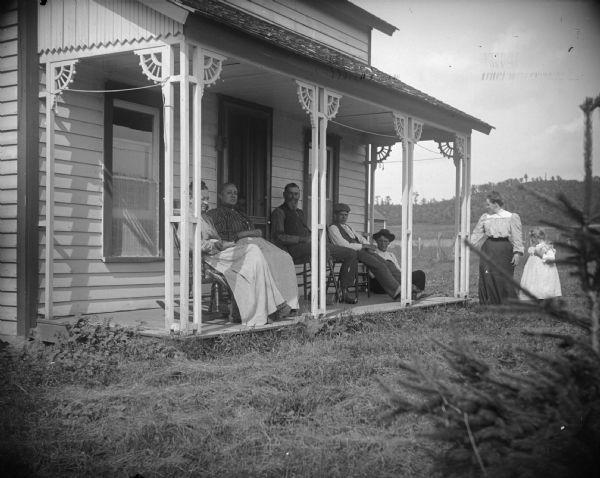
Who Lived in My House Before Me? How to Find Previous Residents
July 25, 2026 · DiedinHouse.com
Wondering who lived in your house before you? Learn how to find previous residents using city directories, census records, deeds, newspapers and public records.
Steps to Research the History of a House (Beginner Guide)
December 23, 2025 · DiedinHouse.com
Learn how to research house history, including past owners, deaths, renovations, and property records using public and historical sources.